EBC Chola Pass Gokyo Trek is a challenging trek, that require a moderate level of physical fitness. The altitude go up to 5,500 meters, and the terrain can be rugged and steep at times. The trails are usually well-defined, but there may be some uphill climbs and rocky sections.
Max. Altitude
5545M
Starts
Kathmandu
Ends
Kathmandu
Group Size
Minimum: 2 pax
Best Season
March-May/Sept-Dec
PRICE PER PERSON
1 PAXUS$1453
2 PAXUS$1347
3 PAXUS$1283
4 PAXUS$1265
5-11 PAXUS$1236
11-21 PAXUS$1210
Price Per Person
US$ 1210All included Services
Highlights
Itinerary
Route Map
What Included / Excluded
Dates & Availability
Photos & Videos
FAQ's
TRIP HIGHLIGHTS
Panoramic views of the world’s highest and most majestic mountains.
Opportunity to immerse in the unique Sherpa culture with friendly locals.
The Tengboche Monastery, one of the most significant spiritual monasteries.
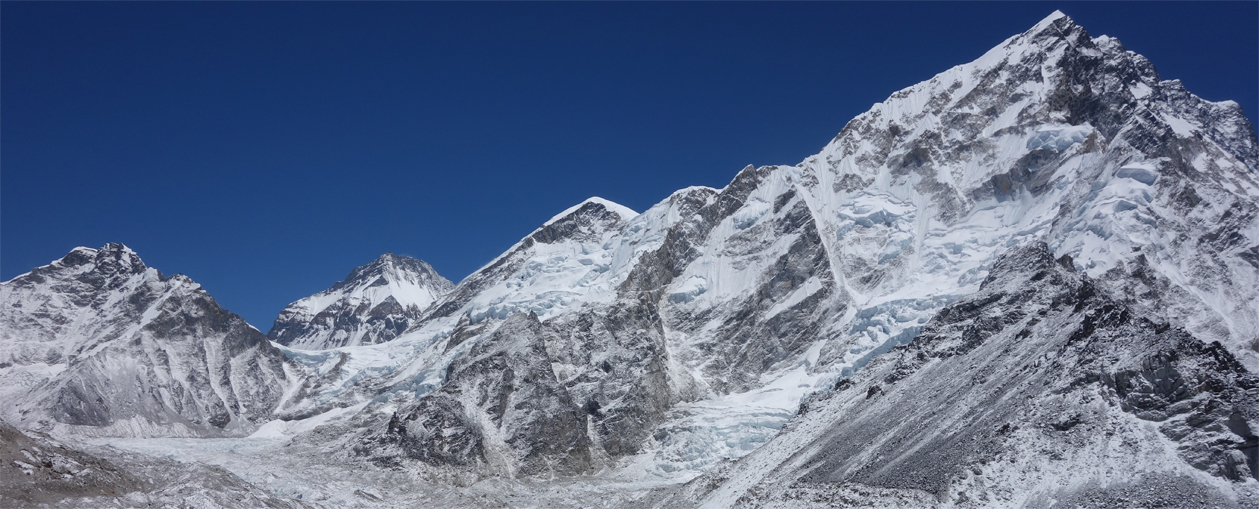
The Khumbu Glacier, a massive glacier known for its striking ice formations.
Explore the local markets, shops, bakeries, and cafes in Namche Bazar.
Diverse flora and fauna, including rare species like the snow leopard and Himalayan tahr.
Experiencing life as the “mountain people” live, in the heart of the Himalaya.
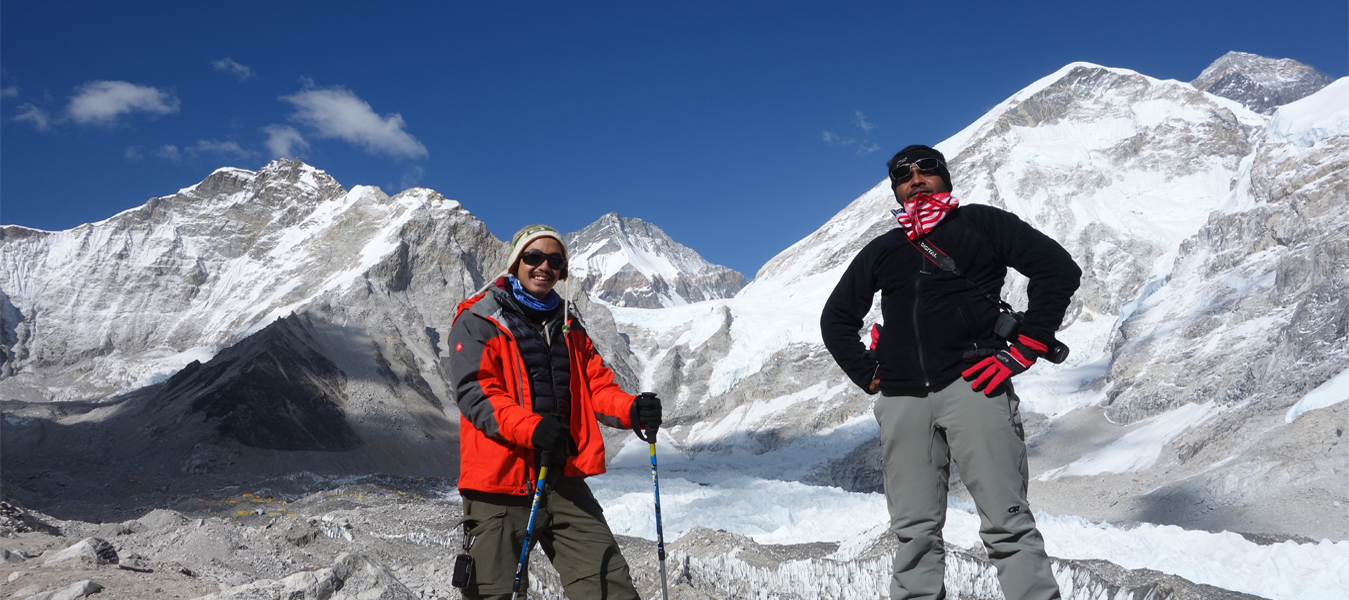
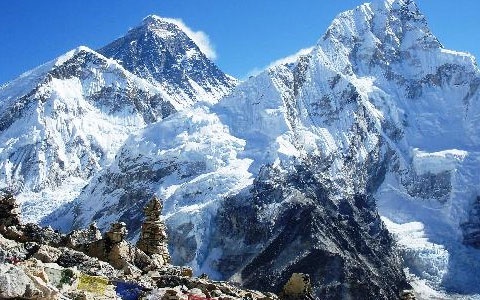
Hike to Kala Patthar(5,545 m) to get 360-degree panoramic views of the Himalayas, including an up-close view of Mount Everest.
Visit the Sherpa Cultural Museum and the Everest Photo Gallery to learn more about the Sherpa culture and the history of mountaineering in the region.
EBC Chola Pass Gokyo Trek
EBC Chola Pass to Gokyo Trek. At a height of 5,364 meters (17,598 feet) above sea level, the Everest Base Camp (EBC) is situated in Nepal’s Solu-Khumbu area. As a UNESCO World Heritage Site, the region is part of the Sagarmatha National Park.
Mount Everest (8,848 meters/29,032 feet), as well as other notable peaks like Lhotse (8,516 meters/27,940 feet), Nuptse (7,855 meters/25,771 feet), and Pumori (7,161 meters/23,494 feet), are all located close to Everest Base Camp. Several high-altitude glaciers, like the Khumbu Glacier, can be found in the region, along with glacial valleys, icefalls, and moraines.
With extremely low temperatures and sparse vegetation, the ecosystem of the Everest Base Camp region is both harsh and forgiving. Despite these challenges, the region is home to a variety of hardy animals and plants that have adapted to high altitudes, including yaks, Himalayan tahr, and several rhododendron and primula species.
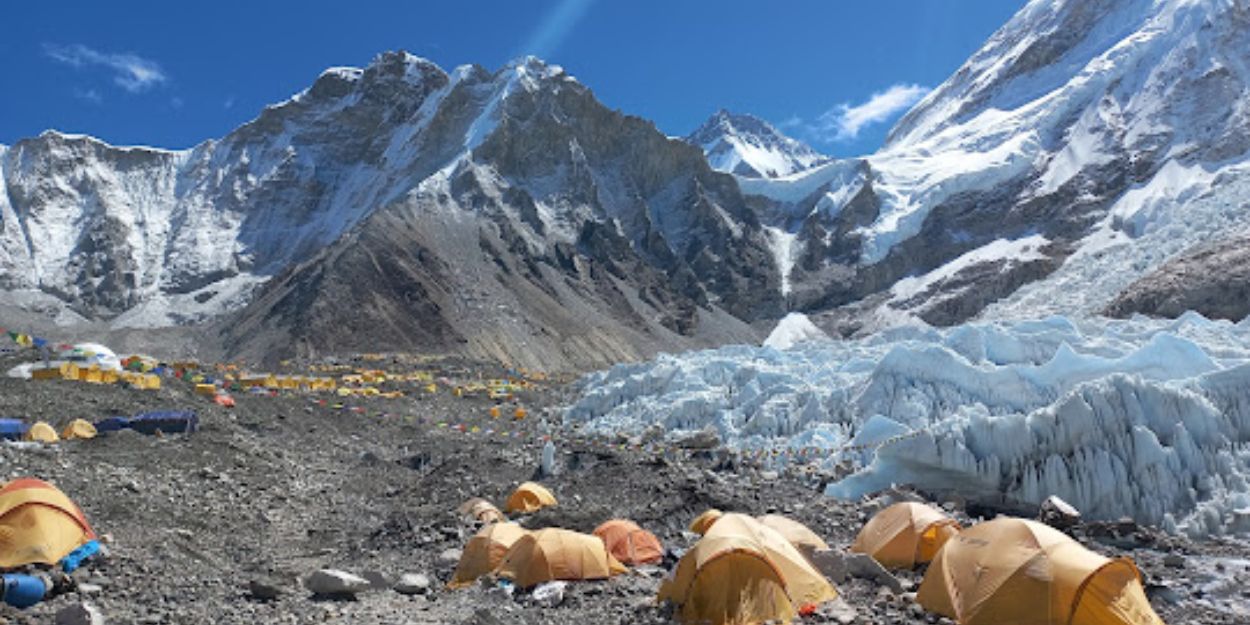
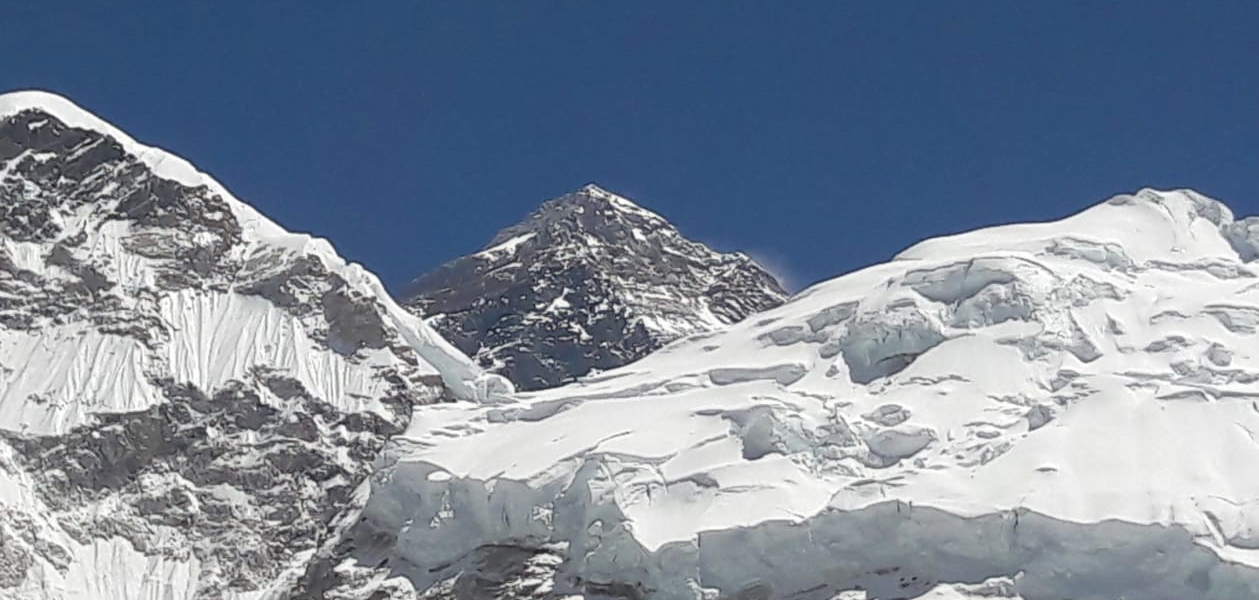
The main highlight of the Everest Base Camp trek is Mount Everest itself, the highest peak in the world, standing at 8,848 meters (29,029 feet). The Everest Base Camp is situated on the Khumbu Glacier at an altitude of approximately 5,364 meters (17,598 feet).
Throughout the trek, you’ll be immersed in awe-inspiring natural beauty. You’ll witness breathtaking sunrises and sunsets over the snow-capped mountains, traverse valleys adorned with colorful rhododendron forests, and cross sparkling rivers and icy streams. Everest Base Camp trek provides an opportunity to immerse yourself in the unique Sherpa culture.
As you pass through Sherpa villages, you’ll encounter friendly locals, witness their daily life, and experience their warm hospitality. You can visit monasteries, interact with monks and participate in their spiritual rituals.
Along the EBC trek route, you’ll find a network of teahouses and lodges that provide accommodation, meals, and a cozy place to rest. These establishments offer a chance to connect with fellow trekkers from around the world, share stories, and form new friendships.
Reaching Everest Base Camp itself is a significant milestone and a highlight of the trek. Standing at the base of the world’s highest peak is a surreal experience. You’ll witness the massive Khumbu Icefall, observe climbers preparing for their summit attempts, and bask in the sense of awe and accomplishment that comes with reaching this iconic destination.
As a popular side trip from Everest Base Camp, hiking up to Kala Patthar (5,545 meters/18,192 feet) offers breathtaking panoramic views of the Himalayas. From this vantage point, you’ll enjoy an up-close view of Mount Everest, along with surrounding peaks and the vastness of the Khumbu Glacier.
It’s important to note that trekking in Nepal can be affected by weather conditions, altitude sickness, and other factors. It’s recommended to hire an experienced guide and porter to ensure a safe and enjoyable trekking experience. The EBC trek is a once-in-a-lifetime experience that combines physical challenge, natural beauty, cultural immersion, and a sense of achievement. It offers a chance to connect with nature, push your limits, and create lifelong memories.
Everest Base Camp Information
Trekking Routes of EBC Chola Pass Gokyo Trek
The EBC (Everest Base Camp) Chola Pass Gokyo Trek is a challenging and exhilarating adventure that combines iconic trekking routes with high-altitude passes and stunning Himalayan vistas. The trek typically begins in Lukla, from where trekkers follow the classic Everest Base Camp route through Phakding and Namche Bazaar. After acclimatizing in Namche, the route continues through Tengboche, Dingboche, and Lobuche before reaching Everest Base Camp (5,364 meters or 17,598 feet). This section of the trek provides breathtaking views of Everest, Lhotse, and Nuptse, along with opportunities to visit the famous Tengboche Monastery and observe the rich Sherpa culture and traditions.
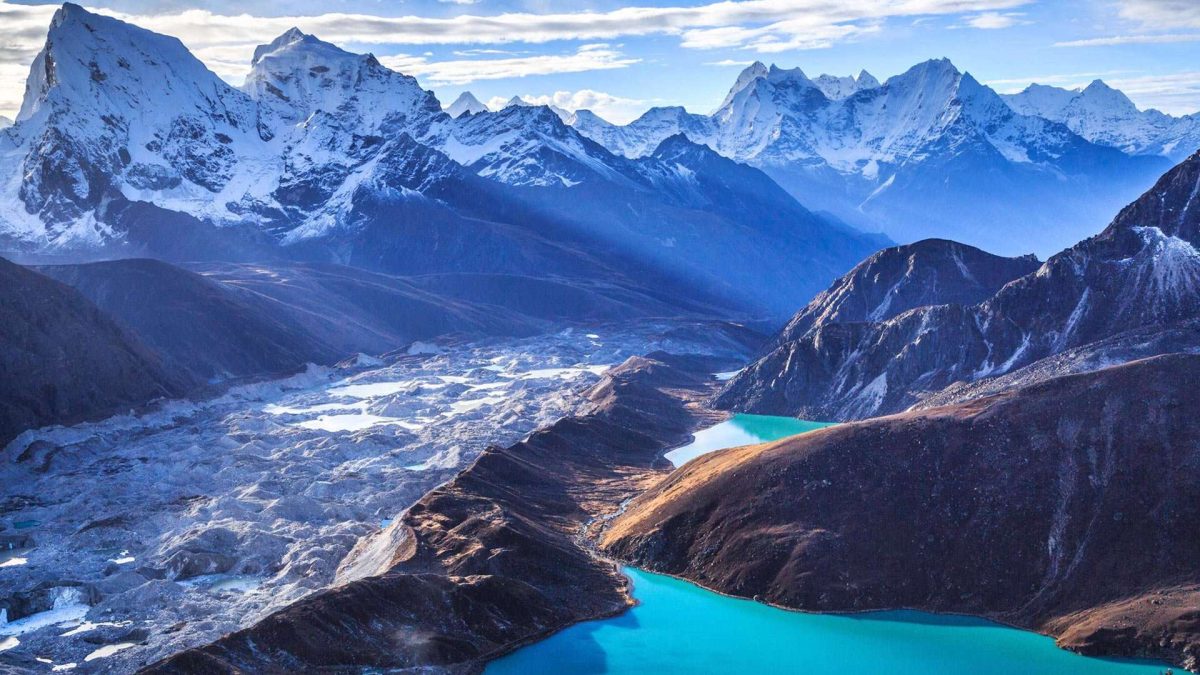
The difficult Chola Pass (5,420 meters or 17,782 feet), a high mountain pass that connects the Khumbu Valley with the Gokyo Valley, is the next challenge the journey will face from Everest Base Camp. The steep and frequently snow- and ice-covered trek to Chola Pass necessitates cautious navigation and occasionally the use of crampons. Trekkers arrive at the immaculate Gokyo Lakes, a collection of turquoise glacial lakes surrounded by towering peaks, as they descend into the Gokyo Valley from the pass.
Table of Contents
After there, the trail ascends to Gokyo Ri, a viewpoint with expansive views of Cho Oyu, Everest, and the other Himalayan giants at 5,357 meters (17,575 feet). After crossing Namche Bazaar and returning to Lukla, the journey comes to a finish. You will have completed a circuit that takes in some of the most breathtaking views and varied terrain in the Everest region. Along with putting hikers’ physical stamina to the strain, this journey offers experiences in culture and unmatched natural beauty.
Permit for EBC Chola Pass Gokyo Trek
A TIMS CARD (Pashang Lamo Local Governments fee ) card and a Sagarmatha National Park permit are required in order to trek to Everest Base Camp. The majority of treks to EBC start from the town of Lukla, from where these permits can be acquired. Find more information on PERMITS
Equipment for EBC Chola Pass Gokyo Trek
Sturdy and comfortable hiking boots, thick clothing (including a down jacket), a sleeping bag, a waterproof backpack cover, and a first aid kit are all necessary items for the EBC trek. Consider carrying trekking poles, a headlamp, sunglasses, and sunscreen as well. View the full Equipment’s lis
Acclimatizations
Before climbing to the EBC, acclimatization is essential. The best strategy to acclimatize is to gradually increase your altitude over time. Additionally, it is advised to stay a few nights at each level before ascending further.
Physical Fitness
The EBC trip requires a high level of physical fitness and is extremely hard. It is recommended to exercise regularly and get physical activity in the months leading up to the walk
Hiring a Guide or Porters
While it is feasible to trek to EBC on your own, many tourists elect to do so in order to receive assistance from a guide or a porter. While a porter can carry your baggage and assist you with trail navigation, a guide can offer helpful advice and assistance.
Health Consideration
It is crucial to be in good health prior to starting the journey due to the high altitude of EBC, which can be taxing on the body. It’s crucial to recognize the signs of altitude sickness and get medical help if necessary.
Best Time to do Trek in EBC Chola Pass Gokyo Trek
During the pre-monsoon and post monsoon will be the best season to trek. The months of pre-monsoon are March, April, July and post monsoon are September, October, November. In December, January, February the weather might get a little bit colder and in June, July, August rain might cause a problem. If the travelers want to avoid the crowd and enjoy the trip privately then our guides can assist through the alternative trials.
First AID
It is better to bring additional medicine for a backup. However, our guides will carry the first kid aid. The medicine such as Acetazolamide- to prevent and reduce altitude sickness, Paracetamols for the fever and diarrhea tablets should be carried.
Wildlife and Flora in EBC Chola Pass to Gokyo Trek
The area around the Manaslu Circuit Trek is renowned for having a wide variety of unusual wildlife. The walk passes through a variety of climates and altitudes, including subtropical forests, alpine meadows, and glaciers, providing a diverse diversity of habitats for numerous plant and animal species. Himalayan black bears, musk deer, snow leopards, and red pandas are a few of the frequently encountered wildlife species in the area.
While the higher elevations are peppered with alpine meadows and grasslands, the lower altitudes of the climb are covered in lush forests of rhododendron, oak, and bamboo. A number of rare and endangered medicinal plants and herbs are also found in the area.
The Manaslu Circuit trip is renowned for its diverse species as well as its magnificent natural beauty and picturesque Himalayan range views, making it a veritable paradise for nature enthusiasts.
It is better to bring additional medicine as a backup. However, our guides will carry the first aid kit. The essential medicines, such as Acetazolamide to prevent and reduce altitude sickness, Paracetamol for fever, and diarrhea tablets, should be carried as well.
Culture and Peoples
Trekkers in the area are frequently welcomed into Sherpa houses for meals and hospitality because the Sherpa people are recognized for their friendliness. The Sherpas are expert craftspeople who create traditional clothing, jewelry, and other handicrafts that are offered for sale in the neighborhood markets.
Religious celebrations like the Mani Rimdu festival and the Dumje festival, which feature song, dance, and offerings to the gods, are among the Sherpa people’s regional customs and traditions.
The Sherpa people’s faith in the strength of mountains and the spirits that live there is one of its most fascinating facets. Before starting their ascent, it is common for hikers and mountain climbers to perform rituals and give prayers at the mountain’s base in order to obtain blessings and protection.
The Sherpas in the Everest region lead primarily subsistence farming and herding lifestyles, depending on crops and cattle for their means of existence. As trekking and mountaineering have developed into significant sources of revenue for the local people, they also work as porters, guides, and in other tourism-related industries.
Accommodations and Logistics Available in EBC Chola Pass to Gokyo Trek
Visitors to the Everest region have a variety of lodging and logistical alternatives. You can pick from a range of lodges, teahouses, and camping facilities based on your interests and budget.
Many modest teahouses along the path provide basic lodging and inexpensive meals for those on a tight budget. There are mid-range lodges that provide private rooms with attached toilets and hot showers for people seeking a little more comfort. There are upscale lodges that provide luxurious accommodations, such as roomy rooms and delicious meals.
Everything in terms of logistics, including transportation to the trailhead, licenses, guide and porter services, and any required equipment, may be organized from Kathmandu. The Everest Base Camp trip is available through a number of trekking companies and travel operators in Kathmandu, and you can tailor your route based on your tastes and available time.
Additionally, it is feasible to make arrangements for helicopter services, which might be a practical choice for people who are pressed for time or who prefer to forego the strenuous nature of the walk.
Regardless of your lodging and logistics preferences, it is crucial to take the appropriate measures and be well-prepared for the trek because the Everest region’s high altitude and rough terrain can present difficulties. EBC Chola Pass to Gokyo Trek, EBC Chola Pass to Gokyo Trek, EBC Chola Pass to Gokyo Trek, EBC Chola Pass to Gokyo Trek,
EBC Chola Pass to Gokyo Trek, EBC Chola Pass to Gokyo Trek, EBC Chola Pass to Gokyo Trek, EBC Chola Pass to Gokyo Trek,
Visitors to the Everest region have a variety of lodging options. You can pick from a range of lodges, teahouses, and camping facilities based on your interests and budget.
Regardless of your lodging and logistics preferences, it is crucial to take the appropriate measures and be well-prepared for the trek. The Everest region’s high altitude and rough terrain can present difficulties. The EBC Chola Pass Gokyo Trek offers an adventure that combines stunning scenery with cultural richness.
Itinerary
Expand AllCollapse All
Day 01
Welcome at Tribhuvan International Airport, then transfer to your hotel.
Max. Altitude: 1400m/4593ft.Meals: BreakfastAccommodation: 2/3 Star Hotel
Upon your arrival at TIA, Our office person will kindly greet you upon arrival at the airport, and you will then be driven to your hotel. The remainder of the day is at leisure. Spend the night in Kathmandu at your hotel.
Day 02
Trek preparation and introduce with trekking staffs
Max. Altitude: 1400m/4593 ft.Meals: BreakfastAccommodation: 2/3 stars hotel
Welcome to Touch The Himalaya Office! Our dedicated team is here to ensure you have an exceptional trekking experience. After a warm welcome, we will transfer you to your comfortable 2/3-star hotel.
At the office, we will provide you with detailed information about the trekking program, including the itinerary, safety measures, and any additional guidance you may need. Our knowledgeable staff will be there to answer any questions and address your concerns.
Afterward, you can immerse yourself in the vibrant cultural diversity of Kathmandu. Explore the city’s rich heritage, taste delicious local cuisine, and enjoy the enchanting atmosphere. Rest well and get ready for an incredible journey that will take you to the magnificent heights of Nepal’s stunning landscapes.
Begin your epic Everest Base Camp trek in Kathmandu (1400m) with a scenic 30-minute flight to Lukla (2,865m / 9,397ft). Trek 8km in 3 hours to Phakding (2,544m/8,344ft), ascending 1,531m in elevation.
At Tenzing Hillary Airport, take a break in hotels for tea while the guide organizes porters and their baggage. Enjoy lunch along the way, passing through Cheplung (2,700m), Thado Koshi, and Ghat (2,590m) villages. Explore Phakding, a charming village with comfortable lodges, and immerse yourself in local cultural experiences. Get ready for an unforgettable adventure in the heart of the Himalayas.
After a hearty breakfast in Phakding (2,544m), embark on a 10.4km trek to Namche Bazaar (3,445m/11,299ft). The journey takes approximately 6 hours, with an elevation gain of 901m.
Follow the banks of the Dudh Koshi River, crossing it twice on small suspension bridges. Enjoy the bustling trail, passing through Zamphuti and admiring the stunning view of Thamserku Peak. Continue to Chomoa and climb to Monjo (2,850m), the entry point of Sagarmatha National Park.
Enter the national park and trek to Jorsale before crossing a large suspension bridge. As you ascend, catch your first glimpse of majestic Mt. Everest and other peaks. After half an hour, arrive at Namche Bazaar.
Namche Bazaar is a thriving trading town and the capital of the Khumbu Region. It serves as the gateway to Everest, offering modern facilities such as excellent lodges, monasteries, shops, bakeries, an army camp, the Sagarmatha National Park quarter, and a museum. Immerse yourself in the vibrant atmosphere of this remarkable place.
Day 05
Acclimatization day at Namche Bazaar (3,445m/11,299ft)
After a nourishing breakfast in Namche Bazaar (3,445m), take the day to acclimatize. There are several options for day hikes to help your body adjust to the altitude. One option is to hike 1.6km up the hill behind Namche Bazaar, reaching the Everest View Point Hotel with its breathtaking vistas.
You can also visit the Sagarmatha National Park Museum, where you can delve into Sherpa culture and the history of mountaineering. Alternatively, spend the day in Namche Bazaar, allowing your body to adjust to the altitude (3,612m/11,283ft). Take leisurely walks around the shopping market and explore the surrounding areas, soaking in the unique atmosphere of this vibrant town.
Day 06
Namche Bazaar Trek to Tengboche (3,867m/12684ft) -6 hrs
After a fulfilling breakfast in Namche Bazaar (3,445m), embark on a scenic 10km trek to Tengboche (3,867m/12,684ft), which takes approximately 6 hours. The elevation gain for the day is 422m.
As you begin your journey, enjoy a pleasant walk through the forest, marveling at the magnificent views of Everest, Nuptse, Lhotse, Ama Dablam, Thamserku, and Kwangde peak. Take in the beauty of the eastern snow-capped mountains along the way.
Cross a high bridge at the village of Phunki Tenga, where you can stop for a refreshing lunch. From there, the trail ascends through the forested path, leading you to Tengboche.
This picturesque location is renowned for its beauty and is home to the largest gompa (Buddhist monastery) in the region. As you arrive, you’ll be greeted by a large field with campsites, tea houses, and lodges, all nestled beneath the awe-inspiring peak of Ama Dablam.
Spend a restful night in Tengboche, soaking in the serene surroundings and the enchanting presence of the majestic Himalayan peaks.
Day 07
Tengboche (3,867m) trek to Dingboche (4,412m/14,471ft) -5/6 hrs.
After breakfast, the trek descends through beautiful rhododendron and pine forests to the Imja Khola River, then gradually ascends passing the traditional Sherpa village of Pangboche, one of the oldest settlements in the Khumbu region.
The trail offers stunning views of Ama Dablam along the way. After lunch, a steady uphill walk leads to Dingboche, a windswept alpine village surrounded by stone walls and dramatic Himalayan peaks. Overnight at a teahouse.
Day 08
Another Acclimatization day at Dingboche (4,412m / 14,471ft)
Enjoy another well-deserved rest day at Dingboche (4,412m/14,471ft) before the final stretch to Everest Base Camp. Take advantage of this day to acclimatize and recharge.
For acclimatization, embark on a day hike up the hill, offering a panoramic view of the Chhukung Valley on the right and the Pheriche Valley on the left. Reach a height of 4,650m, which takes approximately 2-3 hours, before returning to your lodge for a relaxing day of rest and a rejuvenating night’s sleep.
As you hike towards Chhukung, you’ll gradually experience the thin air, reminding you of the increasing altitude. Witness the breathtaking snow-capped peaks and glaciers in the Imjatse Valley towards the east, adding to the awe-inspiring beauty of the surroundings. Use this day to acclimate and prepare yourself for the incredible journey ahead.
Day 09
Dingboche trek to Lobuche (4,931m / 16,174 ft) -5/6 hrs
Embark on a remarkable trek from Dingboche (4,412m / 14,471ft) to Lobuche (4,931m / 16,174ft), covering a distance of 12km over a span of 5-6 hours. The elevation gain for the day is 519m.
The trail ascends steeply, leading you to the terminal moraine of the Khumbu glacier. Along the way, you will pass through the memorial area of Chukpilhara, honoring climbers who have lost their lives in the Everest region.
As you approach Lobuche, be prepared to witness the stunning sunset on Mt. Nuptse, creating a breathtaking spectacle. Above the lodges, the majestic Lhotse Ridge stands tall, adding to the scenic beauty of the surroundings. Enjoy the serenity of Lobuche and spend the night in a cozy lodge, cherishing the memories of another beautiful day of your trek.
Day 10
Lobuche to Gorakshep (5,160m / 16,925ft) & trek to EBC (5,364m / 17,595ft) -6 hrs
After a satisfying breakfast in Lobuche, we embark on an exhilarating 8km trek to Gorakshep at an elevation of 5,160m (16,925ft). The rugged and windy path reveals awe-inspiring vistas of Mt. Pumori, Mt. Nuptse, Mt. Everest, and other majestic peaks. Upon reaching Gorakshep, we settle into our lodge and enjoy a nourishing lunch.
Next, we continue our extraordinary journey towards Everest Base Camp at 5,364m (17,595ft) and the renowned Khumbu Ice-fall. We traverse rocky dunes, moraines, and streams until we finally reach the base camp. This sacred site serves as a gathering point for climbers during their summit expeditions in the high season.
Exploring Everest Base Camp, we are surrounded by pristine white rocks, glistening snow, and the grandeur of the Khumbu Glacier. We behold the breathtaking views of this monumental glacier and even have the opportunity to touch its icy surface. Nestled within a serene valley, Everest Base Camp offers panoramic vistas of the surrounding landscapes.
We immerse ourselves in the awe-inspiring beauty of this extraordinary place, a testament to human determination and the power of nature.
Day 11
Hike up to Kalapattar and trek back to Dzongla (5,544 m 5-6 hrs)urs
Started with a stroll to take in a breathtaking view of the sun rising from Kalapatthar. You will reach Kalapatthar after a few hours of walking, where you may sit and satisfy your eyes’ hunger for a beautiful vista of the Himalayas. From Kalapattar’s 360-degree vantage point, it is possible to see Everest, Lhotse, Nuptse, Pumo Ri, Ama Dablam, Khangtenga, Lobuche Peak, Everest Base Camp, Khumbu glacier, and Icefalls.
You will leave your mark while taking lifetime-preserving memories and pictures with you. You will return to Gorakshep, gather your belongings, and get ready to go back the way you came to Lobuche. Then, you will go to Dzongla along the lovely path.
Day 12
Dzongla to Thangna via Cho La Pass (4,500 m; 15 km; 7 hrs)
Get up early in the morning to see Cholatse’s breathtaking scenery. The hardest part of the Gokyo Cho La Pass Trekking via EBC Itinerary starts after you pass through Dzongla and drop to a basin after passing through spur woods. You will be rewarded with a stunning view of Chola Lake and Mt. Ama Dablam as you ascend back to the top.
Rocks make the ascent more challenging and lead to the winding Bergschrund trails. From the summit, you can view stunning peaks all around you, which are framed by soaring prayer flags. The descent to Thagnak is not very difficult unless the rocks are coated in ice, which would make the journey hazardous and difficult. Thagnak is where you will spend the night.
Day 13
Thangna to Gokyo (4,790 m, 11 km; 7-8 hrs)
Max. Altitude: 4,790m / 15711ftMeals: Breakfast/Lunch/DinnerAccommodation: Lodge/Guest house
In order to continue on the EBC Trek with Gokyo Chola Pass Route over Nepal’s longest glacier, the Ngozumpa Glacier, you must depart the little community early in the morning. As you go closer to the opposite side of the glacier, you might be able to view the second Gokyo lakes, one of the six series. The Gokyo hamlet may be situated on the third lake’s edge, near the second lake.
Day 14
Climb Gokyo Ri and trek to Machhermo (5357 m; 8 km; 4-5 hrs)
Max. Altitude: (5357 m/17,570 ftMeals: Breakfast/Lunch/DinnerAccommodation: Teahouse/Guest House
The ascent to Gokyo Ri isn’t easy, with a continuous uphill walk just from the south of Taujun Lake. It features high cliffs and mountain ridges, which are incredibly difficult to climb. But, once reach the acme, you’ll enjoy the magnificent scenery along with the surrounding snow peaks.
Following the exploration, we’ll plummet the trail and continue the expedition from the base of Ngozumpa Glacier. After an hour of trek, we’ll cross the wild grazing field and trek along the Dudh Koshi River. On the way to the village, you’ll see the dramatic landscapes and yak pastures.
After hiking more than 8 km, we’ll arrive at Machhermo. The village lies in the Dudh Koshi River Valley below the terminal moraine of Ngozumpa Glacier. Machhermo welcomes visitors with the impressive scenery of lofty mountains and lush green farms.
Day 15
Machhermo to Namche Bazaar (3,440 m; 10 km; 4-5 hrs)
Max. Altitude: 3,440 m/11,283ftMeals: Breakfast/Lunch/DinnerAccommodation: Teahouse / Guest House
Today begins in Machhermo and concludes in Namche Bazaar Via a beautiful town Dole. Your walk will descend, where you will see that the plants and wildlife are more diverse. Phortse Thanga is reached during the steep drop, followed by Mong La and then a moderate descent to Namche. Mount Khumbila, Taboche, Thamserku, Ama Dablam, Everest, and Tengboche, which serve as a backdrop, can be said goodbye to as you go. The night will be spent at a tea house in Namche.
The hike to Lukla is easy compared to any other trek. Most of the walks are downhill through the densely forested area and some remote Sherpa villages. After a gentle descent to Bhote Koshi River and a leisurely walk, we’ll eventually end up at Namche. Overnight stay in a hotel.
Day 17
Fly out from Lukla to Kathmandu (1,400m/4,593ft).
Max. Altitude: 1,400m/4,593ft.Meals: Breakfast/Lunch/DinnerAccommodation: 3 Star Hotel
On the final day of your mountain journey, you will fly out from Lukla to Kathmandu. The maximum altitude on this day is 1,400m (4,593ft). Upon reaching Kathmandu, you will have the opportunity to reflect on the incredible trek you have just completed. Take some time to explore Thamel, a bustling area known for its shops and souvenirs, where you can find mementos to commemorate your adventure.
In the evening, gather with your fellow trekkers to celebrate the successful completion of the trek. Enjoy some drinks and a delicious dinner as you share stories and memories of your time in the mountains. It’s a time to relax, unwind, and appreciate the achievement of reaching your goal.
Day 18
Departure Flight Back to Say Goodbye and good and safe journey
Max. Altitude: 1,400m/4,593ft.Meals: BreakfastAccommodation: 2/3 Star hotel
On your departure day, after enjoying breakfast at your hotel, it’s time to say goodbye to Nepal and begin your journey back home. The maximum altitude on this day is 1,400m (4,593ft). Check out from your hotel and make sure you have all your belongings with you.
To ensure a smooth departure, arrange for an airport transfer at least 3 hours before your scheduled flight. This will allow enough time for check-in, security procedures, and any necessary formalities at the airport. Bid farewell to the beautiful country of Nepal and embark on your safe journey back home, carrying with you memories and experiences that will last a lifetime.
Itinerary Note:
This itinerary is just the guide line, it can be changed (longer or shorter) as per our client's wishes, fitness, ground reality and weather condition. If you're not satisfied or have an alternative plan please feel free to discuss it with us By Clicking :- ASK QUESTION or COSTOMIZE YOUR TRIP.
Airport pick up and drop off by Car, jeep, Hiace or Bus. Depends on the number of arrives.
Complimentary welcome or farewell dinner according to the suitability of our client’s time.
Beginning two nights stay on arrival in Kathmandu in tourist standard hotel with breakfast included (twin share basis)
Kathmandu to Lukla (trekking starting point) transfer by flight, and way back from Lukla to Kathmandu by flight
All necessary trekking and area permit & fees, (Everest National Park area special permit and TIMs cards).
Three meals a day during the trek (Breakfast/Lunch/Dinner)
All accommodation during trek (Tea house/guesthouse)
An experienced, English-speaking, government-licensed, first aid trained Everest special trekking guide and assistant guide (5 trekkers: 1 assistant guide)
An expert local porter from Everest area (2 trekkers: 1 porter)
Duffel bag, (to be returned after trip completion), complementary trekking maps. If needed down jacket and sleeping bag will be provided in rent.
Staff costs including their salary, insurance, Equipment, transport, food and accommodations
Rescue arrangements if necessary.
Basic First-aid kit (carried by trekking guide)
All government and local taxes for Trekking, Agency service charge and government tax/vat.
Achievement Certificate
Cost Excludes
International airfare and Nepal visa fee.
Lunch and Dinner in Kathmandu
Extra night accommodation in Kathmandu because of early arrival, late departure, early return from mountain (due to any reason) than in the scheduled itinerary
Personal insurance which covers medical, emergency evacuation, loss or theft of property.
Personal gears and equipment.
Personal expenses such as laundry, hot showers, battery charging, Wifi, etc
Entry fees and costs in sightseeing (temples, monasteries, etc)
Tips and gratitude provided to guide and porter.
Fixed Departure
JANURARY 2026
FEBURARY 2026
MARCH 2026
APRIL 2026
MAY 2026
JUNE 2026
JULY 2026
AUGUST 2026
SEPTEMBER 2026
OCTOBER 2026
NOVEMBER 2026
DECEMBER 2026
Start: ThursdayFebruary 5, 2026
End: SundayFebruary 22, 2026
Price: US$ 1453 1210
Status: Available
Remarks:
Start: MondayFebruary 9, 2026
End: ThursdayFebruary 26, 2026
Price: US$ 1453 1210
Status: Available
Remarks:
Start: ThursdayFebruary 19, 2026
End: SundayMarch 8, 2026
Price: US$ 1453 1210
Status: Available
Remarks:
Can't find trip as your Schedule Date?
Above mentioned departure dates “AVILABLE”‘ means these dates are currently open for bookings for the particular Trek. If the mentioned dates are not suitable with your preferred date, you can make your own private trip by clicking the box billow in the bottom.
A date “GUARANTEED” means that we give guarantees that the costumers will be able to start theirs trek on the specified date, regardless of whether the seats are fully booked or not.
“LIMITED”‘ Status refers to a type of seats booking for the trek, that has been certain seats available to book
In the status, “CLOSED” means that the Trekkers seats are fully booked and there are no more seats available for new booking. Trekkers may be put on a waitlist for a chance to get a seat if there are cancellations unless your are requested to plan your own private trip by clicking the box billow in the bottom.
Normally we don’t include meals and accommodation on the trek, however Meal and accommodation will be provided if required from our clients. As from our experience we know that altitude and physical exercise can mean appetites vary hugely. Cost goes higher in the mountain as we ascend because all the supplies carried in by porters, donkeys, yaks and by Helicopter, Over the snowline (3500 meter), rarely very little food can be grown. How much you spend per day will depends according to your choice of meal but generally, people spend between 2000 to 3000 Nepali Rupees per person per day on meals and accommodation. 1 $ value more or less about 100 Nepali Rupees.
What types of foods avilable in trek ?
Meal will be provided by menu in mountain, most of the teahouse provide very much similar menu however the cost will be different each and other sattelment. Normally breakfast is usually either hot porridge, muesli or Tibetan bread served with an omelette or boiled eggs. There will usually be a choice of traditional Nepalese dhal bhat (a mixed plate of lentils, rice, vegetables and pickles – delicious and healthy!), Nepalese dumplings (momo’s), mixed noodles, pasta and even pizza. Although meat is available at some teahouses, we suggest you ask your guide for their advice re consumption as it tends to depend on how far it has travelled as to whether it is a safe option.
What is the best season for trekking?
During the pre-monsoon and post monsoon will be the best season to trek. The months of pre-monsoon are March, April, July and post monsoon are September, October, November. In December, January, February the weather might get a little bit colder and in June, July, August rain might cause a problem. If the travelers want to avoid the crowd and enjoy the trip privately then our guides can assist through the alternative trials.
What is the age limit for Everest Base Camp trekking?
The age limit has not been precise for the trek but the traveler should be physically fit, mentally stable should have an insurance which must cover the emergency evacuation, medical conditions and accidental cases. In case of insurance the travelers are need to pay here in Nepal first and then claim to their insurance company later.
Does additional medicine are need to be brought for the trekking?
It is better to bring additional medicine for the backup. However our guides will carry the first kid aid. The medicine such as Acetazolamide- to prevent and reduce the altitude sickness, Paracetamols for the fever and diarrhea tablets should be carried.
What will be the arrangement provided on the Everest Base Camp trekking?
The best tea house in the local region will be provided for our clients which will have a comfortable bed and good local food. The trek will be eco-friendly and the way travelers are looking for.
Where is it possible to store extra baggage which is not required during the trekking?
Yes, extra luggage which are not needed during the trek can be stored in the hotels or in our office safely in Kathmandu.
Is there any modes to carry our gears?
We provide porter to carry the travelers baggage however most of the travelers carry their personal stuffs with them and the other bag are carried by our porter. If the travelers are also uncomfortable to carry their personal stuffs then we can manage it.
What if I need to leave early or unable to continue the trek?
In this case, we will manage the necessary transportation and reservation for our clients; According to the client’s demand we can also manage the helicopter for the safely evacuation of our clients. But there will be no any refund which has been paid for the package though it has not been used. For the further information of cancellation, click on the highlighted cancellation.
Is there communication facilities on the mountain?
For the communication, mobile phones are used all over the Nepal and the facility of internet are available in the mobile phones and tea houses as well.
If I arrive early or depart late, can you manage lodging?
Yes, we can manage your extra night lodging if in any case our guests arrive early or depart late. Please feel free to contact us for further required lodging information.
Is insurance required for Everest Base Camp trekking?
Yes, The travelers should have the international insurance which should cover the emergency evacuation, medical conditions and accidental cases. In case of insurance the travelers are need to pay here in Nepal first and then claim to their insurance company later.
Are the guides well trained?
We provide local guides and porters who are from the same region and very well experienced. They are also certified by the government. They have a well training through which they can handle any situation which comes under. They have well knowledge of geology, history and culture of the travel region.
Is tipping mandatory?
Tips are not obligatory. It is a kind of showing the gratitude towards the person who have helped you during the visit. It can be in USD or Pound or Nepali Rupee.
Does the domestic flights gets cancelled or delayed?
Due to the weather conditions domestic flights could get cancelled or delayed but alternative way will be used to complete the trip successfully and happily in such cases (According to the travelers willing)
Is ATM service available during the Everest Base Camp trekking?
In most of the region ATM service are not available so we suggest our travelers to carry the amount they required from Kathmandu.
What about altitude sickness during the Everest Base Camp trek?
Altitude sickness is also known as mountain sickness. Mountain sickness is the main problem for any mountain trekkers. Some time trekkers might have altitude sickness during Everest Base Camp trek There are different types of sickness like-
AMS – Acute Mountain sickness – AMS is a very common sickness like a hangover, dizziness, muscle ache, nausea, headache vomiting tec
HAPE – High Altitude Pulmonary Edema – HAPE direct impact on lungs it’s fluid in the lungs which are dangerous for breathing.
HACE- High Altitude Cerebral Edema – HACE it’s the different form of altitude sickness its fluid in the brains
Thus, HAPE and HAPE are the main dangerous and life-threatening form of mountain sickness. Patient has to treat on time if not treated on time if late they may die. Whereas AMS is normal mountain sickness then HACE and HAPE.
What are the tips for avoiding altitude sickness in Everest Base Camp trek?
There are some tips to which our company would like to guide for the travelers to avoid altitude sickness; such as:
Avoiding the drinks which contains the caffeine added, smoking and alcohol
Travel slowly concerning your health
Drinking more amount of water i.e. minimum 3-4 liters per day
Being familiarized with the environment and having a healthy foods and beverage
Continuing with Diamox if needed, it is carried for the backup



 Moderate Trek