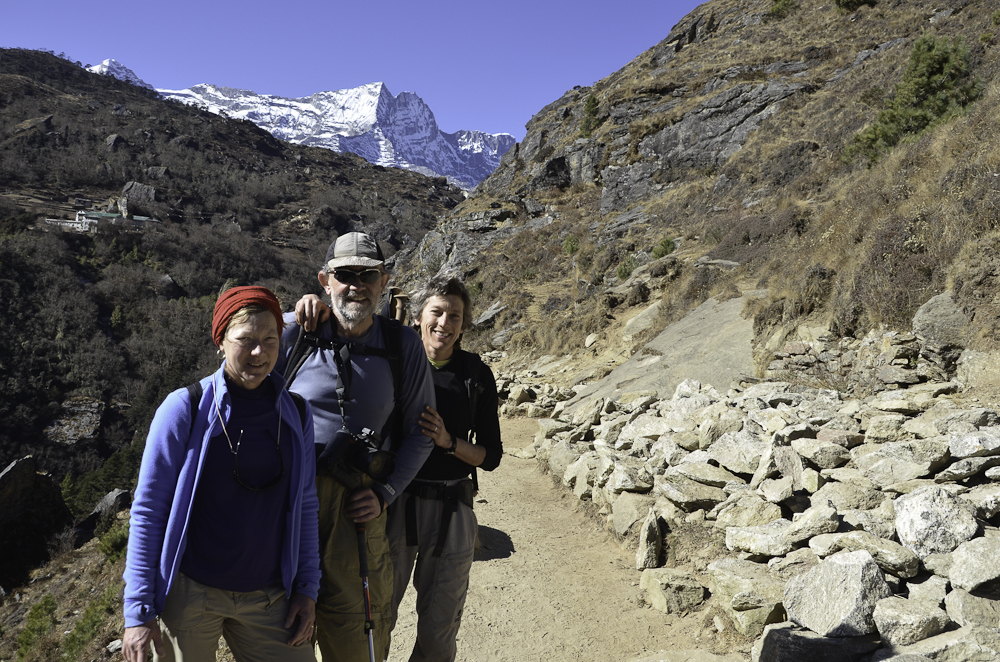
These hikes present a moderate challenge, requiring a reasonable level of physical fitness. Altitudes may reach up to 4,000 meters, with terrain that can be rugged and steep. While trails are generally clear, expect occasional uphill stretches and rocky terrain.
Max. Altitude
5545M
Starts
Kathmandu
Ends
Kathmandu
Group Size
Minimum: 2 pax
Best Season
March-May/Sept-Dec
PRICE PER PERSON
1 PAXUS$1253
2 PAXUS$1147
3 PAXUS$1083
4 PAXUS$1065
5-11 PAXUS$1036
11-21 PAXUS$1010
Price Per Person
US$ 1010All included Services
Highlights
Itinerary
Route Map
What Included / Excluded
Dates & Availability
Photos & Videos
Additional Information
FAQ's
TRIP HIGHLIGHTS
Explore the local markets, shops, bakeries and cafes in Namche Bazar.
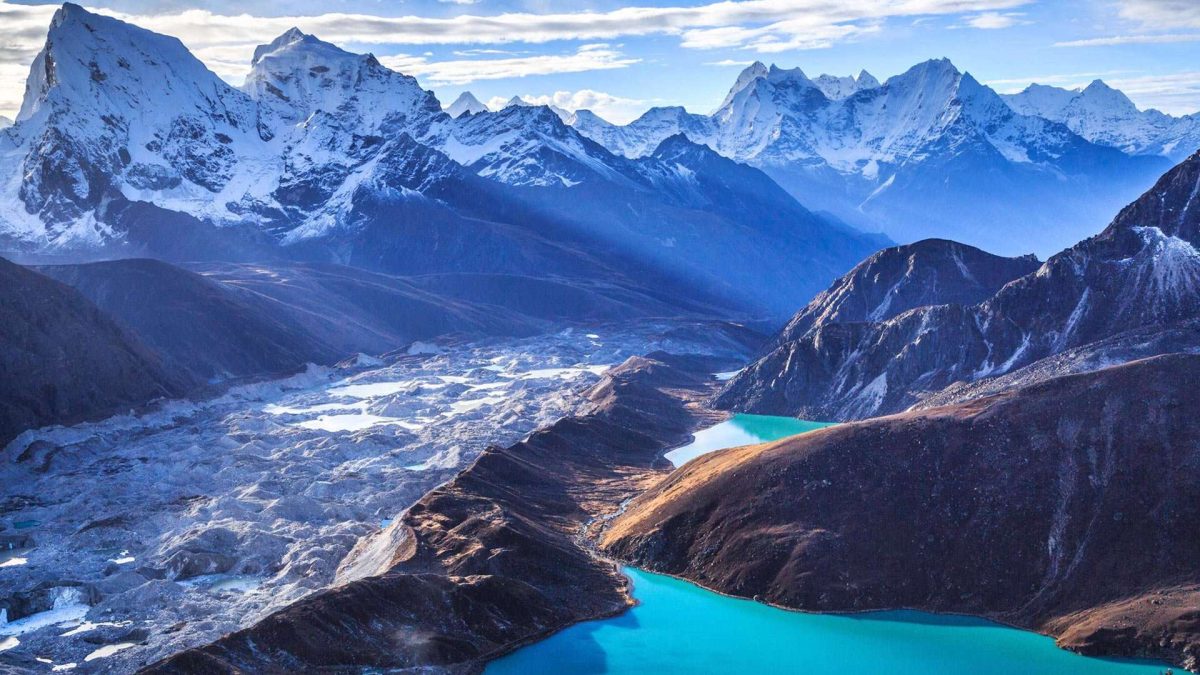
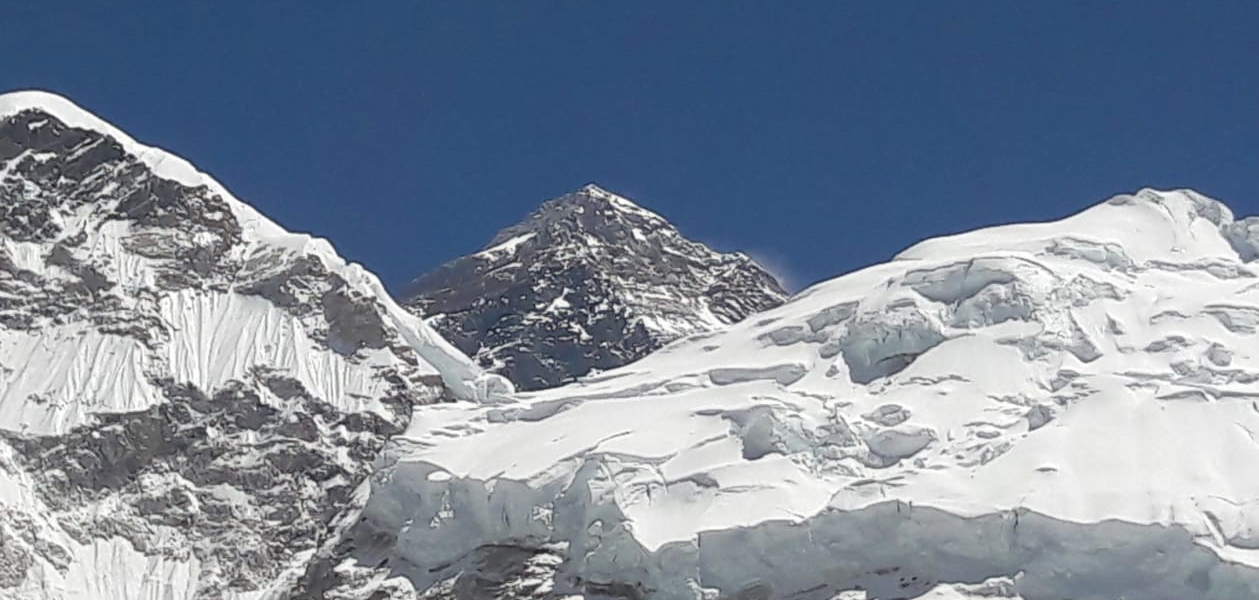
Breathtaking panoramic views of some of the world’s highest and most majestic mountains, including Mount Everest (8,848 meters) and Lhotse (8,516 meters).
Opportunity to immerse yourself in the unique Sherpa culture with friendly locals.
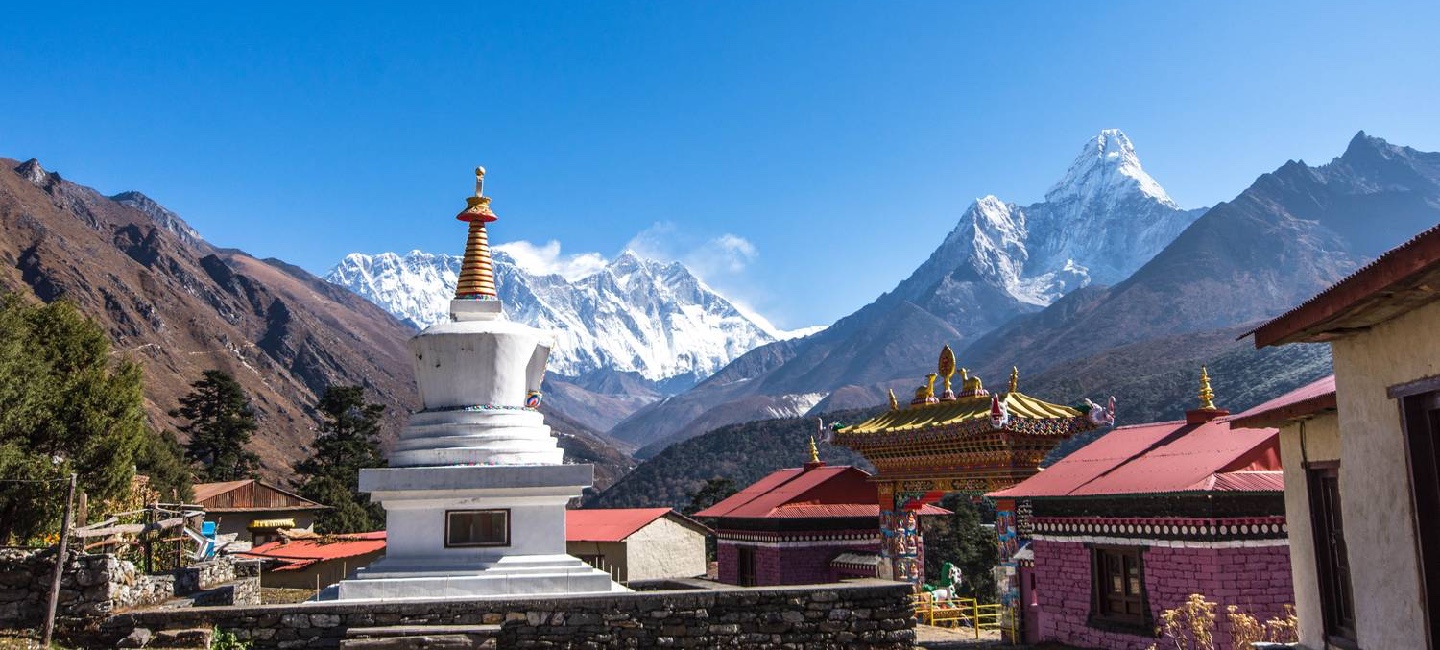
The Tengboche Monastery, one of the most significant spiritual monasteries in the Everest region, offers a peaceful and serene atmosphere.
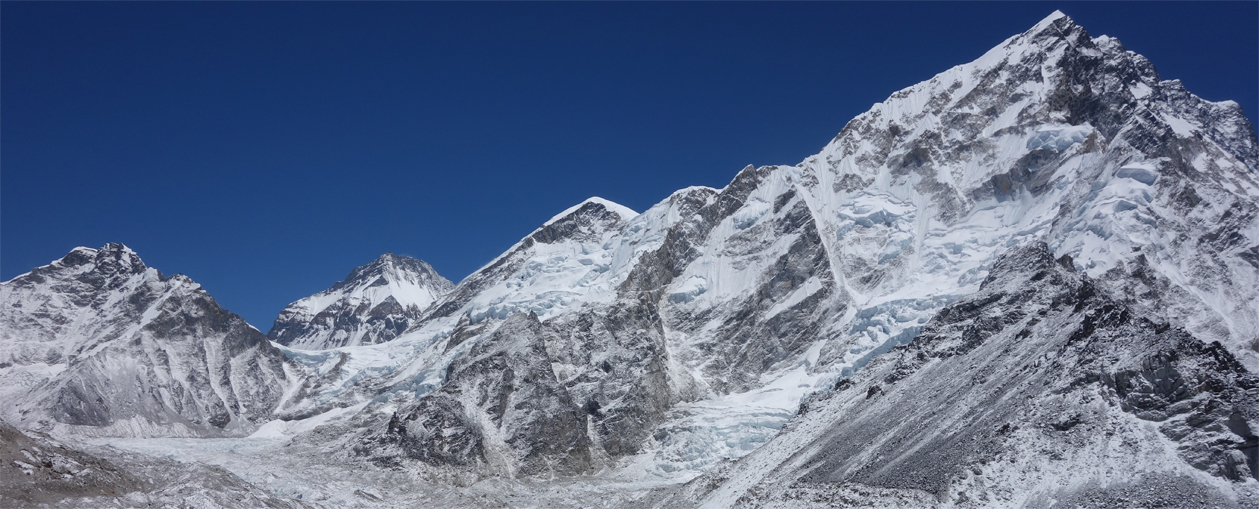
Explore the Khumbu Glacier, a massive glacier known for its striking ice formations.
Local Nepalese and Sherpa cuisine: Dal Bhat (rice and lentils), momo (dumplings), Sherpa stew, and yak-based dishes.
Hike up to Kala Patthar(5,545 meters) to get a stunning 360-degree panorama of the Himalayas, including an up-close view of Mount Everest.
Diverse flora and fauna, including rare species like the snow leopard and Himalayan tahr.
Experiencing life as the “mountain people” live, in the heart of Himalaya.
Panoramic view from Syangbuche.
Visit the Sherpa Cultural Museum and the Everest Photo Gallery to learn more about the Sherpa culture and the history of mountaineering in the region.
Everest Base Camp Trek, Where Ultimate Himalayan Adventure Starts!
Welcome to the legendary Everest Base Camp Trek, a once-in-a-lifetime journey to the foot of the world’s highest peak, Mt. Everest (8,848 meters). This iconic trek takes you deep into the heart of Nepal’s stunning Khumbu region, through vibrant Sherpa villages, ancient monasteries, and breathtaking alpine landscapes.
At Touch The Himalaya Treks, we are passionate about making your dream adventure safe, unforgettable, and truly personal. Our experienced local guides will lead you step-by-step along this awe-inspiring trail, ensuring you experience not just the majestic mountains, but also the rich culture and warm hospitality of the Himalayas.
This 12-day adventure offers breathtaking Himalayan views, vibrant Sherpa culture, and unforgettable experiences at every step. Whether you’re an avid trekker or a first-time visitor to Nepal, the Everest Base Camp Trek is the ultimate bucket list adventure. Let our experienced local guides lead you on a safe, exciting, and memorable journey to the heart of the Khumbu region.
With our incredible 15-day Everest Base Camp Trek also referred to as the Kalapathar Trek or EBC Trek, you can set off on an incredible adventure at an amazing price! Renowned for its jaw-dropping mountain views, interactions with the Sherpa people, touring Sagarmatha National Park, and excursions to high-altitude Buddhist temples, this journey is among the best in the world.
At Touch The Himalaya Treks and Expedition, we prioritize quality service with cost-effective packages, ensuring ample adaptation time for both novice and seasoned trekkers. Opt for our Rapid Everest Base Camp Trek for experienced adventurers seeking a quicker ascent.
Whether you’re a seasoned trekker or a first-time adventurer, the Everest Base Camp Trek offers a perfect blend of challenge, beauty, and inspiration. Join us for this 12-day adventure — stand at the base of Everest, gaze upon the Khumbu Icefall, and create memories that will last a lifetime.
Let’s Touch the Himalayas together!
Begin your adventure with a scenic flight from Kathmandu to Lukla, followed by a warm welcome from our experienced guides as we trek towards Phakding. Traverse diverse landscapes, from viewpoints to glaciers, culminating at the foot of Mount Everest. Immerse yourself in Tibetan culture amidst rhododendron forests and panoramic views of the Himalayas. Trek through Lukla, Phakding, Namche Bazaar, Phortse Village, Dingboche, Duglha, Lobuche, Gorakshep, Kalapatthar, and Everest Base Camp, each offering unique charm and challenges.
Utilize our comprehensive Everest Base Camp Trek Map for altitude variations and itinerary planning. Forge unforgettable memories of conquering heights and embracing the beauty of the Himalayas.
Everest Base Camp Trek – Itinerary Overview
Our Standard Everest Base Camp Trek is a 12-day journey that begins in Kathmandu and follows the legendary trail through Namche Bazaar, Tengboche, Dingboche, and Gorakshep before reaching the iconic Everest Base Camp (5,364 m) and Kala Patthar (5,545 m). Each day offers scenic landscapes, cultural experiences, and gradual altitude gain for safe acclimatization.
Everest Base Camp Trek – Outline itinerary
Day 1: Fly to Lukla (2,840m) and trek to Phakding (2,610m), Lukla-Phading 7.8 km, 3-4 hours walking. Day 2: Trek from Phakding to Namche Bazaar (3,440m), 10.4 km, 6-7 hours walking Day 3: Acclimatization day at Namche Bazaar (hike to Everest View Hotel) 9.2 Km, 5-6 Hours walking. Day 4: Trek from Namche Bazaar to Tengboche (3,860m), 9.2 Km, 4-5 Hours walking. Day 5: Trek from Tengboche to Dingboche (4,410m), 9.2 Km, 4-5 Hours walking. Day 6: Acclimatization day at Dingboche (hike to Nagarjun Hill) Day 7: Trek from Dingboche to Lobuche (4,910m), 8.1 Km, 4-5 Hours walking. Day 8: Trek from Lobuche to Gorakshep (5,140m) and visit Everest Base Camp (5,364m) 4.6 Km +3.4 KM, (8 Km total) 7-8 Hours walking. Day 9: Hike to Kala Patthar (5,545m) and trek down to Pheriche (4,240m) Day 10: Trek from Pheriche to Namche Bazaar Day 11: Trek from Namche Bazaar to Lukla Day 12: Fly back to Kathmandu
Table of Contents
Trending Topics for Everest Base Camp Trek in 2025
Regulatory Changes: Nepal is considering new regulations requiring climbers to summit at least one 7,000-meter peak before attempting Everest. This aims to reduce overcrowding and enhance safety. Permit Fee Increase: Starting September 2025, the climbing permit fee is set to rise from $11,000 to $15,000 per climber. Technological Advancements: Drones are being introduced to assist Sherpas in navigating the Khumbu Icefall, aiming to enhance safety and efficiency. Environmental Concerns: There’s a growing emphasis on sustainable trekking practices, including waste management and eco-friendly accommodations. Helicopter Flight Restrictions: A ban on non-rescue helicopter flights to Everest has been implemented to reduce noise pollution and environmental impact.
Essential Inclusions for Your Everest Base Camp Trek Package
To align with current trends and traveler expectations, consider incorporating the following elements into your EBC trek packages:
Comprehensive Acclimatization Plan: Ensure your itinerary includes gradual altitude gains and rest days to help trekkers acclimate properly.
Experienced Local Guides and Porters: Employ knowledgeable Sherpa guides and provide fair wages and insurance, reflecting ethical practices.
Sustainable Practices: Implement eco-friendly measures such as waste management systems and the use of renewable energy sources in accommodations.
Quality Accommodations: Offer comfortable lodging options, including teahouses with amenities like hot showers and Wi-Fi where available.
Health and Safety Measures: Provide medical kits, oximeters to monitor oxygen levels, and access to emergency services.
Cultural Experiences: Include visits to local monasteries and villages to immerse trekkers in Sherpa culture and traditions.
Flexible Itineraries: Offer options for different durations and difficulty levels to cater to a broader range of trekkers.
Good To Know Before you head into the Everest Base Camp trek.
Experience the magic of the Himalayas in all their glory, from majestic peaks to serene valleys, with every step offering a discovery.
Enjoy the fantastic hospitality of friendly locals along the trail and immerse yourself in their unique culture.
Connect with nature and disconnect yourself from the pressures of the digital world.
Plan your budget wisely. There are not a lot of ATMs so carry some spare cash to enjoy local treats and get some local souvenirs from your adventure.
Leave no trails behind and respect the environment by making sure not to leave trash behind. Enjoy your trip and make sure others can do the same in the future.
Discover and savor unique and delicious local dishes along your trail.
Trust experienced guides and trekking agencies to navigate the trail safely, allowing you to focus on the beauty around you.
Everest Base Camp Trek Permits: Costs, Requirements, and Where to Get Them (2025 Guide)
To trek to Everest Base Camp, you’ll need: Khumbu Pasang Lhamu Rural Municipality Permit which cost NPR 2,000 per person (for the first four weeks), and we obtain them at Lukla (immediately after landing) Or at the Nepal Tourism Board office in Kathmandu. This permit replaces the old TIMS (Trekkers’ Information Management System) card for the Everest region.
And we need Sagarmatha National Park Entry Permit which cost NPR 3,000 per person (foreigners) and NPR 1,500 for SAARC nationals That can be obtain in Nepal Tourism Board office in Kathmandu (Bhrikutimandap) Or at the Monjo checkpoint (on the trail). For further details on permits, please refer to our Additional Resources
Note: Since 2018, TIMS cards are no longer required for Everest region treks.
Essential Gear List for Everest Base Camp Trek.
For the Everest Base Camp trek, essential items include durable and comfortable hiking boots, warm clothing, a down jacket, a sleeping bag, a waterproof cover for your backpack, and a first aid kit. Additionally, trekking poles, a headlamp, sunglasses, and sunscreen are recommended for added comfort and safety along the journey. Dress appropriately in layers to stay comfortable in various weather conditions, from sunny days to chilly nights. View the full Equipment list
Acclimatizations
Altitude sickness is a common concern; it’s essential to acclimatize properly and listen to your body. It is advised to adapt slowly as you trek higher. Additionally, it would be helpful to camp for 1 to 2 days at every stop along the hike to let your body get accustomed to the altitude and the environment of the Himalayas.
Physical Fitness
The EBC trek is a strenuous trekking route and demands good physical fitness to conquer the trail. It is recommended to exercise regularly until you get into a state of good physical fitness before attempting this trek.
Hiring Guides or Porters
Independently trekking to Everest Base Camp is possible. However, many travelers opt for the assistance of a guide and porter for the sake of safety and convenience. A porter can help you with your belongings and navigate the trails, while the guide provides insightful advice and support throughout the trail.
Health Consideration
Being at the top feels great, but you need to be in great shape to get to the top. Maintaining your health is crucial before going to Everest Base Camp. Considering the high altitude, the diverse terrain, and the strain on your body, one must be in good health before taking this trip. It is also very important to be aware of altitude sickness and seek medical assistance if needed.
Best Time to Trek
The most suitable time to go for the EBC trek is pre-monsoon and post-monsoon. The recommended months for this climb are March, April, and July for pre-monsoon and September, October, and November for post-monsoon. In any other month, the weather will cause a problem in your trek. For example, in December, January, and February the weather is a bit colder than usual and we have rain in June, July, and August which causes landslides and avalanches. If you are worried about the trail being crowded in the suitable months our seasoned guides can take you through alternative routes so that you enjoy your trek peacefully.
First AID Kits:
It is always best to be ready for any medical challenges so you can carry basic medication that you might need during your climb. Our guides will carry the first aid kit. Medicines such as Acetazolamide are required to prevent and reduce altitude sickness, and Paracetamols for the fever along with diarrhea tablets should be carried.
Wildlife and Flora
Every trek in Nepal offers unique wildlife and floras that are found in specific regions. Similarly, you can find exotic plant life such as Rhododendron forests, Juniper trees, Pine trees, Edelweiss, and Alpine vegetation as you climb your way up to the base camp. These plants decorate the glorious Himalayan trek to create a view that is worth a lifetime and reflects the art of nature.
Although the environment is extremely challenging there are animals in these parts that thrive in this environment and spend their lives here. Some of these are the Himalayan Tahrs, Snow Leopards, Musk Deers, Himalayan Monals, and Himalayan Griffons. These animals co-exist in this ecosystem with perfect balance. This also reflects the intricate hands of Mother Nature.
Culture and Peoples
The resident Sherpas community is renowned for its warm hospitality and often invites trekkers into their homes for meals and lodgings along the route. They are also friendly and have awesome craftsmanship in producing traditional clothing, intricate jewelry, and local handicraft items which are available for purchase in local markets. This cultural exchange enriches the trekking experience, providing insights into the Sherpa way of life and fostering connections between travelers and the local community.
Regional customs and traditions of the Sherpa people include vibrant religious celebrations such as the Mani Rimdu festival and the Dumje festival. These events showcase traditional songs, dances, and offerings to the gods, providing a colorful glimpse into Sherpa culture and spirituality. Travelers have the opportunity to immerse themselves in these festive occasions, witnessing age-old rituals and sharing in the joyous atmosphere created by the Sherpa community.
The Sherpa people’s belief in the power of mountains and the spirits inhabiting them is a captivating aspect of their culture. Prior to embarking on their ascent, hikers and mountaineers often engage in rituals and prayers at the mountain’s base, seeking blessings and protection for a safe journey. This spiritual connection to the mountains enriches the trekking experience, highlighting the Sherpa community’s reverence for nature and the divine.
The Sherpas in the Everest region primarily lead subsistence farming and herding lifestyles, relying on crops and cattle for their livelihood. With the growth of trekking and mountaineering as significant sources of income, many Sherpas also engage in tourism-related roles such as porters, guides, and other hospitality services, contributing to the region’s economy while preserving their traditional way of life.
Accommodations:
Accommodations along the Everest Base Camp (EBC) Trek route primarily consist of teahouses, which are modest yet purposefully designed for visitors. These teahouses offer basic rooms with low-rise mattresses, foam mattress pads, and wood-paneled or plastered walls. While some rooms may have in-room heaters or rely on a central burner for warmth, hot showers are available in select teahouses, with cold showers being more common.
Most teahouses provide electrical charging facilities, often for a fee. Touch The Himalaya Treks and Expedition strives to ensure excellent accommodation at guesthouses and teahouses along the trekking route, featuring clean rooms and warm blankets for comfort.
In Kathmandu, guests stay for two nights in good hotels in Thamel on a twin-share basis, with attached bathrooms and standard amenities provided. Teahouses along the EBC Trek offer basic accommodation in twin rooms or dormitories, with shared toilets and bathrooms, some with Western-style toilets.
Communal dining areas serve breakfast and dinner at communal tables, with boiled water available for a small charge. Additionally, luxury lodges are available at lower altitudes within the Everest Region, offering comfortable amenities. Touch The Himalaya Treks and Expedition ensures that guests receive top-notch accommodation options throughout their journey, catering to their preferences for an enjoyable trekking experience.
Why choose Touch The Himalaya For this Everest Base Camp Trek?
Choosing Touch The Himalaya Treks and Expedition for your Everest Base Camp trek has clear benefits:
Local Expertise
Experienced Guides: Our local guides know the Everest region well, giving you an authentic experience.
Cultural Insights: We share rich insights into Sherpa culture and traditions, adding meaning to your trek.
Personalized Itineraries
Custom Treks: We design the trek to fit your preferences, whether you want a slower pace or extra stops.
Flexible Plans: Our itineraries are flexible and can be adjusted based on what you want.
Comfort and Quality
Quality Stays: We provide clean and comfortable accommodations in teahouses along the way.
Reliable Services: Our well-organized services, including meals and transportation, ensure a smooth trip.
Safety and Support
Safety First: Your safety is our priority. We follow strict safety rules, and our guides are trained for high-altitude trekking.
24/7 Support: We offer support around the clock to help with any issues during the trek.
Responsible Tourism
Eco-Friendly: We focus on reducing our impact on the environment by following responsible trekking practices.
Community Support: We support local communities by working with local guides, porters, and businesses.
Memorable Experience
Stunning Views: Enjoy breathtaking views of the Everest region, including the world’s highest peaks.
Cultural Immersion: Experience the unique Sherpa culture, with chances to visit monasteries and local villages.
Choose Touch The Himalaya Treks and Expedition for a safe, enjoyable, and unforgettable Everest Base Camp trek, where we handle every detail for an exceptional experience.
Welcome at Tribhuvan International Airport, then transfer to your hotel.
Max. Altitude: 1400m/4593ft.Meals: BreakfastAccommodation: 2/3 Star Hotel
Upon your arrival at TIA, Our office person will kindly greet you upon arrival at the airport, and you will then be driven to your hotel. The remainder of the day is at leisure. Spend the night in Kathmandu at your hotel.
Day 02
Trek preparation and introduce with trekking staffs
Max. Altitude: 1400m/4593 ft.Meals: BreakfastAccommodation: 2/3 stars hotel
Welcome to Touch The Himalaya Office! Our dedicated team is here to ensure you have an exceptional trekking experience. After a warm welcome, we will transfer you to your comfortable 2/3-star hotel.
At the office, we will provide you with detailed information about the trekking program, including the itinerary, safety measures, and any additional guidance you may need. Our knowledgeable staff will be there to answer any questions and address your concerns.
Afterward, you can immerse yourself in the vibrant cultural diversity of Kathmandu. Explore the city’s rich heritage, taste delicious local cuisine, and enjoy the enchanting atmosphere. Rest well and get ready for an incredible journey that will take you to the magnificent heights of Nepal’s stunning landscapes.
Begin your epic Everest Base Camp trek in Kathmandu (1400m) with a scenic 30-minute flight to Lukla (2,865m / 9,397ft). Trek 8km in 3 hours to Phakding (2,544m/8,344ft), ascending 1,531m in elevation. At Tenzing Hillary Airport, take a break in hotels for tea while the guide organizes porters and their baggage. Enjoy lunch along the way, passing through Cheplung (2,700m), Thado Koshi, and Ghat (2,590m) villages. Explore Phakding, a charming village with comfortable lodges, and immerse yourself in local cultural experiences. Get ready for an unforgettable adventure in the heart of the Himalayas.
After a hearty breakfast in Phakding (2,544m), embark on a 10.4km trek to Namche Bazaar (3,445m/11,299ft). The journey takes approximately 6 hours, with an elevation gain of 901m.
Follow the banks of the Dudh Koshi River, crossing it twice on small suspension bridges. Enjoy the bustling trail, passing through Zamphuti and admiring the stunning view of Thamserku Peak. Continue to Chomoa and climb to Monjo (2,850m), the entry point of Sagarmatha National Park.
Enter the national park and trek to Jorsale before crossing a large suspension bridge. As you ascend, catch your first glimpse of majestic Mt. Everest and other peaks. After half an hour, arrive at Namche Bazaar.
Namche Bazaar is a thriving trading town and the capital of the Khumbu Region. It serves as the gateway to Everest, offering modern facilities such as excellent lodges, monasteries, shops, bakeries, an army camp, the Sagarmatha National Park quarter, and a museum. Immerse yourself in the vibrant atmosphere of this remarkable place.
Day 05
Acclimatization day at Namche Bazaar (3,445m/11,299ft)
After a nourishing breakfast in Namche Bazaar (3,445m), take the day to acclimatize. There are several options for day hikes to help your body adjust to the altitude. One option is to hike 1.6km up the hill behind Namche Bazaar, reaching the Everest View Point Hotel with its breathtaking vistas.
You can also visit the Sagarmatha National Park Museum, where you can delve into Sherpa culture and the history of mountaineering. Alternatively, spend the day in Namche Bazaar, allowing your body to adjust to the altitude (3,612m/11,283ft). Take leisurely walks around the shopping market and explore the surrounding areas, soaking in the unique atmosphere of this vibrant town.
Day 06
Namche Bazaar Trek to Tengboche (3,867m/12684ft) -6 hrs
After a fulfilling breakfast in Namche Bazaar (3,445m), embark on a scenic 10km trek to Tengboche (3,867m/12,684ft), which takes approximately 6 hours. The elevation gain for the day is 422m.
As you begin your journey, enjoy a pleasant walk through the forest, marveling at the magnificent views of Everest, Nuptse, Lhotse, Ama Dablam, Thamserku, and Kwangde peak. Take in the beauty of the eastern snow-capped mountains along the way.
Cross a high bridge at the village of Phunki Tenga, where you can stop for a refreshing lunch. From there, the trail ascends through the forested path, leading you to Tengboche. This picturesque location is renowned for its beauty and is home to the largest gompa (Buddhist monastery) in the region. As you arrive, you’ll be greeted by a large field with campsites, tea houses, and lodges, all nestled beneath the awe-inspiring peak of Ama Dablam.
Spend a restful night in Tengboche, soaking in the serene surroundings and the enchanting presence of the majestic Himalayan peaks.
Day 07
Tengboche (3,867m) trek to Dingboche (4,412m/14,471ft) -5/6 hrs.
After a fulfilling breakfast in Namche Bazaar (3,445m), embark on a scenic 10km trek to Tengboche (3,867m/12,684ft) that takes approximately 6 hours. Enjoy the pleasant walk through the forest, with breathtaking views of Everest, Nuptse, Lhotse, Ama Dablam, Thamserku, and Kwangde peak. Pause at Phunki Tenga for a refreshing lunch before ascending through the forested path. Arrive at Tengboche, renowned for its picturesque beauty and the largest gompa in the region. Admire the field of campsites, tea houses, and lodges beneath the majestic peak of Ama Dablam. Rest and rejuvenate, surrounded by the serene ambiance and the awe-inspiring Himalayan peaks.
Day 08
Another Acclimatization day at Dingboche (4,412m / 14,471ft)
Enjoy another well-deserved rest day at Dingboche (4,412m/14,471ft) before the final stretch to Everest Base Camp. Take advantage of this day to acclimatize and recharge.
For acclimatization, embark on a day hike up the hill, offering a panoramic view of the Chhukung Valley on the right and the Pheriche Valley on the left. Reach a height of 4,650m, which takes approximately 2-3 hours, before returning to your lodge for a relaxing day of rest and a rejuvenating night’s sleep.
As you hike towards Chhukung, you’ll gradually experience the thin air, reminding you of the increasing altitude. Witness the breathtaking snow-capped peaks and glaciers in the Imjatse Valley towards the east, adding to the awe-inspiring beauty of the surroundings. Use this day to acclimate and prepare yourself for the incredible journey ahead.
Day 09
Dingboche trek to Lobuche (4,931m / 16,174 ft) -5/6 hrs
Embark on a remarkable trek from Dingboche (4,412m / 14,471ft) to Lobuche (4,931m / 16,174ft), covering a distance of 12km over a span of 5-6 hours. The elevation gain for the day is 519m.
The trail ascends steeply, leading you to the terminal moraine of the Khumbu glacier. Along the way, you will pass through the memorial area of Chukpilhara, honoring climbers who have lost their lives in the Everest region. As you approach Lobuche, be prepared to witness the stunning sunset on Mt. Nuptse, creating a breathtaking spectacle. Above the lodges, the majestic Lhotse Ridge stands tall, adding to the scenic beauty of the surroundings. Enjoy the serenity of Lobuche and spend the night in a cozy lodge, cherishing the memories of another beautiful day of your trek.
Day 10
Lobuche to Gorakshep (5,160m / 16,925ft) & trek to EBC (5,364m / 17,595ft) -6 hrs
After a satisfying breakfast in Lobuche, we embark on an exhilarating 8km trek to Gorakshep at an elevation of 5,160m (16,925ft). The rugged and windy path reveals awe-inspiring vistas of Mt. Pumori, Mt. Nuptse, Mt. Everest, and other majestic peaks. Upon reaching Gorakshep, we settle into our lodge and enjoy a nourishing lunch.
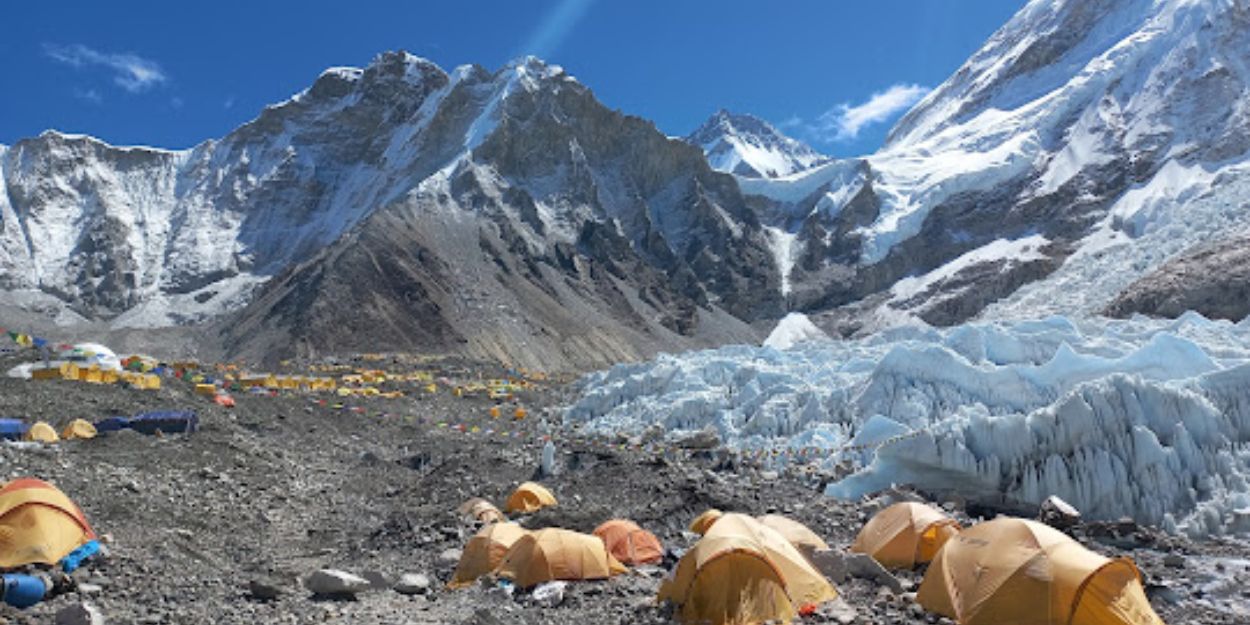
Next, we continue our extraordinary journey towards Everest Base Camp at 5,364m (17,595ft) and the renowned Khumbu Ice-fall. We traverse rocky dunes, moraines, and streams until we finally reach the base camp. This sacred site serves as a gathering point for climbers during their summit expeditions in the high season.
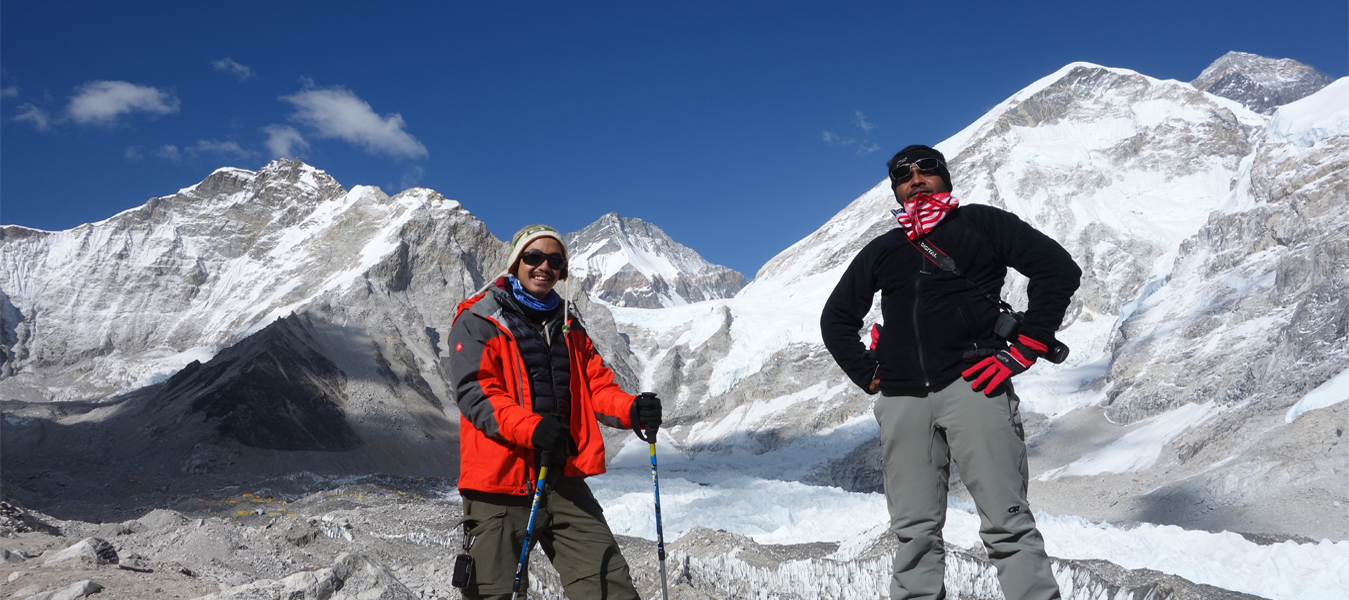
Exploring Everest Base Camp, we are surrounded by pristine white rocks, glistening snow, and the grandeur of the Khumbu Glacier. We behold the breathtaking views of this monumental glacier and even have the opportunity to touch its icy surface. Nestled within a serene valley, Everest Base Camp offers panoramic vistas of the surrounding landscapes. We immerse ourselves in the awe-inspiring beauty of this extraordinary place, a testament to human determination and the power of nature.
Day 11
GorakShep to Kala Pattar (5,550m/18,204ft) to Pangboche -7/8 Hours
Early in the morning, we embark on a 1.2km hike from Gorak Shep to Kala Pattar (5,550m/18,204ft), also known as the Black Hill or Black Rock. This scenic hike offers the most breathtaking sunrise views of the Everest region. As we ascend, we join the steady stream of hikers with their headlamps illuminating the path. After 2-3 hours, we reach the hilltop, where we are rewarded with the best view of Mt. Everest, Nuptse, Pumori, Ama Dablam, and the entire Khumbu Himalayan range.
We then hike back to Gorak Shep for a hearty breakfast before checking out and commencing our descent to Pangboche. This downhill trek will take approximately 8 hours, allowing us to soak in the stunning landscapes along the way.
Day 12
Pangboche Trek to Namche Bazar (3,445m/11,299ft) -6 hours
From Pangboche, we continue our trek, descending through Tengboche and enjoying the magnificent views along the way. The trail leads us to Kyangjuma, and from there, it’s just a few more hours of hiking to reach Namche Bazaar. In Namche, we will celebrate our journey with a well-deserved night of rest and enjoyment.
Day 13
Trek down from Namche to Lukla (2,865m / 9,397ft ) -6 Hours.
Max. Altitude: 2,865m / 9,397ftMeals: Breakfast/Lunch/DinnerAccommodation: Lodge/Guest house
On this final day of our trek, we descend from Namche Bazaar to Lukla (2,860m) in approximately 6 hours. The trail takes us through enchanting forests filled with rhododendrons and pine trees. As we make our way through the Sherpa village, we’ll have the chance to bid farewell and express our gratitude to the local team staff who have supported us throughout the journey. Eventually, we reach Lukla, where we can reflect on the incredible adventure we’ve experienced in the Himalayas.
On the final day of your mountain journey, you will fly out from Lukla to Kathmandu. The maximum altitude on this day is 1,400m (4,593ft). Upon reaching Kathmandu, you will have the opportunity to reflect on the incredible trek you have just completed. Take some time to explore Thamel, a bustling area known for its shops and souvenirs, where you can find mementos to commemorate your adventure.
In the evening, gather with your fellow trekkers to celebrate the successful completion of the trek. Enjoy some drinks and a delicious dinner as you share stories and memories of your time in the mountains. It’s a time to relax, unwind, and appreciate the achievement of reaching your goal.
Day 15
Departure Flight Back to Say Goodbye and good and safe journey
Max. Altitude: 1,400m/4,593ft.Meals: BreakfastAccommodation: 2/3 Star hotel
On your departure day, after enjoying breakfast at your hotel, it’s time to say goodbye to Nepal and begin your journey back home. The maximum altitude on this day is 1,400m (4,593ft). Check out from your hotel and make sure you have all your belongings with you.
To ensure a smooth departure, arrange for an airport transfer at least 3 hours before your scheduled flight. This will allow enough time for check-in, security procedures, and any necessary formalities at the airport. Bid farewell to the beautiful country of Nepal and embark on your safe journey back home, carrying with you memories and experiences that will last a lifetime.
Itinerary Note:
This itinerary is just the guide line, it can be changed (longer or shorter) as per our client's wishes, fitness, ground reality and weather condition. If you're not satisfied or have an alternative plan please feel free to discuss it with us By Clicking :- ASK QUESTION or COSTOMIZE YOUR TRIP.
Airport pick up and drop off by Car, jeep, Hiace or Bus. Depends on the number of arrives.
Complimentary welcome or farewell dinner according to the suitability of our client’s time.
Beginning two nights stay on arrival in Kathmandu in tourist standard hotel with breakfast included (twin share basis)
Kathmandu to Lukla (trekking starting point) transfer by flight, and way back from Lukla to Kathmandu by flight
All necessary trekking and area permit & fees, (Everest National Park area special permit and TIMs cards).
Three meals a day during the trek (Breakfast/Lunch/Dinner)
All accommodation during trek (Tea house/guesthouse)
An experienced, English-speaking, government-licensed, first aid trained Everest special trekking guide and assistant guide (5 trekkers: 1 assistant guide)
An expert local porter from Everest area (2 trekkers: 1 porter)
Duffel bag, (to be returned after trip completion), complementary trekking maps. If needed down jacket and sleeping bag will be provided in rent.
Staff costs including their salary, insurance, Equipment, transport, food and accommodations
Rescue arrangements if necessary.
Basic First-aid kit (carried by trekking guide)
All government and local taxes for Trekking, Agency service charge and government tax/vat.
Achievement Certificate
Cost Excludes
International airfare and Nepal visa fee.
Lunch and Dinner in Kathmandu
Extra night accommodation in Kathmandu because of early arrival, late departure, early return from mountain (due to any reason) than in the scheduled itinerary
Personal insurance which covers medical, emergency evacuation, loss or theft of property.
Personal gears and equipment.
Personal expenses such as laundry, hot showers, battery charging, Wifi, etc
Entry fees and costs in sightseeing (temples, monasteries, etc)
Tips and gratitude provided to guide and porter.
No fixed departures for this trek yet. Contact us for a private trek.
Can't find trip as your Schedule Date?
Above mentioned departure dates “AVILABLE”‘ means these dates are currently open for bookings for the particular Trek. If the mentioned dates are not suitable with your preferred date, you can make your own private trip by clicking the box billow in the bottom.
A date “GUARANTEED” means that we give guarantees that the costumers will be able to start theirs trek on the specified date, regardless of whether the seats are fully booked or not.
“LIMITED”‘ Status refers to a type of seats booking for the trek, that has been certain seats available to book
In the status, “CLOSED” means that the Trekkers seats are fully booked and there are no more seats available for new booking. Trekkers may be put on a waitlist for a chance to get a seat if there are cancellations unless your are requested to plan your own private trip by clicking the box billow in the bottom.
Teahouses along the EBC trail have seen significant upgrades, offering improved bedding, hygiene facilities, and even solar-powered electricity.Some lodges now provide Wi-Fi connectivity, allowing trekkers to stay connected and share their experiences in real-time.
Alternative and Shorter Routes
To cater to time-constrained travelers, new trekking routes and helicopter-assisted options are gaining popularity.These alternatives offer flexibility without compromising the quintessential EBC experience.
Technological Advancements
The integration of drones for route scouting and equipment transport is enhancing safety, particularly in challenging sections like the Khumbu Icefall.
Regulatory Changes
Nepal is considering new regulations requiring climbers to summit another 23,000-foot peak before attempting Everest, aiming to enhance safety and reduce overcrowding.
5. Cultural and Spiritual Immersion
Trekkers are increasingly seeking authentic cultural experiences, such as visiting monasteries like Tengboche and engaging with Sherpa communities to gain deeper insights into local traditions.
Recommended Inclusions for Your EBC Trek Packages
To align with these trends and meet trekkers’ expectations, consider incorporating the following elements into your packages:
Comprehensive Services
Round-trip flights between Kathmandu and Lukla.
All necessary permits, including TIMS and Sagarmatha National Park entry.
Experienced local guides and porters.
Accommodation in upgraded teahouses with improved amenities.
Provision of essential gear like sleeping bags and duffel bags.
First aid support and emergency protocols.
Cultural Experiences
Visits to significant monasteries and participation in local festivals.
Interactive sessions with Sherpa communities to learn about their heritage and lifestyle.
Flexible Itineraries
Options for shorter treks or helicopter-assisted segments for those with limited time.
Alternative routes to avoid crowded paths and offer unique perspectives.
Sustainable Practices
Encouragement of eco-friendly practices, such as using refillable water bottles and minimizing plastic waste.
Partnerships with teahouses utilizing solar energy and
FAQ's
What are The extra Cost of Everest Base Camp Trek Package?
The following are not included in the Everest Base Camp Trek Package.
price:
Any types of drinks while on the trek
Travel insurance
Visas and vaccinations
Tips for the guides and porters (optional)
Showers, Wifi, and charging while trekking
Upgraded Accommodations in the Teahouse/guesthouse
What types of foods avilable in Everest Base Camp trek ?
Meal will be provided by menu in mountain, most of the teahouse provide very much similar menu however the cost will be different each and other sattelment. Normally breakfast is usually either hot porridge, muesli or Tibetan bread served with an omelette or boiled eggs. There will usually be a choice of traditional Nepalese dhal bhat (a mixed plate of lentils, rice, vegetables and pickles – delicious and healthy!), Nepalese dumplings (momo’s), mixed noodles, pasta and even pizza. Although meat is available at some teahouses, we suggest you ask your guide for their advice re consumption as it tends to depend on how far it has travelled as to whether it is a safe option.
What is the best season for Everest Base Camp Trek?
During the pre-monsoon and post monsoon will be the best season to trek. The months of pre-monsoon are March, April, July and post monsoon are September, October, November. In December, January, February the weather might get a little bit colder and in June, July, August rain might cause a problem. If the travelers want to avoid the crowd and enjoy the trip privately then our guides can assist through the alternative trials.
What is the age limit for Everest Base Camp trekking?
The age limit has not been precise for the trek but the traveler should be physically fit, mentally stable should have an insurance which must cover the emergency evacuation, medical conditions and accidental cases. In case of insurance the travelers are need to pay here in Nepal first and then claim to their insurance company later.
Does additional medicine are need to be brought for Everest Base Camp Trek ?
It is better to bring additional medicine for the backup. However our guides will carry the first kid aid. The medicine such as Acetazolamide- to prevent and reduce the altitude sickness, Paracetamols for the fever and diarrhea tablets should be carried.
What will be the arrangement provided on the Everest Base Camp trek?
The best tea house in the local region will be provided for our clients which will have a comfortable bed and good local food. The trek will be eco-friendly and the way travelers are looking for.
Where is it possible to store extra baggage which is not required during the trekking?
Yes, extra luggage which are not needed during the trek can be stored in the hotels or in our Touch The Himalaya’s store in Kathmandu safely during your Everest Base Camp Trek.
Is there any modes to carry our gears for Everest Base Camp Trek?
We provide porter to carry the travelers baggage however most of the travelers carry their personal stuffs with them and the other bag are carried by our porter. If the travelers are also uncomfortable to carry their personal stuffs then we can manage it.
What if I need to leave early or unable to continue the trek?
In this case, we will manage the necessary transportation and reservation for our clients; According to the client’s demand we can also manage the helicopter for the safely evacuation of our clients. But there will be no any refund which has been paid for the package though it has not been used. For the further information of cancellation, click on the highlighted cancellation.
Is there communication facilities on the mountain?
For the communication, mobile phones are used all over the Nepal and the facility of internet are available in the mobile phones and tea houses as well.
If I arrive early or depart late, can you manage lodging?
Yes, we can manage your extra night lodging if in any case our guests arrive early or depart late. Please feel free to contact us for further required lodging information.
Is insurance required for Everest Base Camp trek?
Yes, The travelers should have the international insurance which should cover the emergency evacuation, medical conditions and accidental cases. In case of insurance the travelers are need to pay here in Nepal first and then claim to their insurance company later.
Are the guides well trained for this Everest Base Camp Trek?
We provide local guides and porters who are from the same region and very well experienced. They are also certified by the government. They have a well training through which they can handle any situation which comes under. They have well knowledge of geology, history and culture of the travel region.
Is tipping mandatory?
Tips are not obligatory. It is a kind of showing the gratitude towards the person who have helped you during the visit. It can be in USD or Pound or Nepali Rupee.
Does the domestic flights gets cancelled or delayed?
Due to the weather conditions domestic flights could get cancelled or delayed but alternative way will be used to complete the trip successfully and happily in such cases (According to the travelers willing)
Is ATM service available during the Everest Base Camp trekking?
In most of the region ATM service are not available so we suggest our travelers to carry the amount they required from Kathmandu.
What about altitude sickness during the Everest Base Camp trek?
Altitude sickness is also known as mountain sickness. Mountain sickness is the main problem for any mountain trekkers. Some time trekkers might have altitude sickness during Everest Base Camp trek There are different types of sickness like-
AMS – Acute Mountain sickness – AMS is a very common sickness like a hangover, dizziness, muscle ache, nausea, headache vomiting tec
HAPE – High Altitude Pulmonary Edema – HAPE direct impact on lungs it’s fluid in the lungs which are dangerous for breathing.
HACE- High Altitude Cerebral Edema – HACE it’s the different form of altitude sickness its fluid in the brains
Thus, HAPE and HAPE are the main dangerous and life-threatening form of mountain sickness. Patient has to treat on time if not treated on time if late they may die. Whereas AMS is normal mountain sickness then HACE and HAPE.
What are the tips for avoiding altitude sickness in Everest Base Camp trek?
There are some tips to which our company would like to guide for the travelers to avoid altitude sickness; such as:
Avoiding the drinks which contains the caffeine added, smoking and alcohol
Travel slowly concerning your health
Drinking more amount of water i.e. minimum 3-4 liters per day
Being familiarized with the environment and having a healthy foods and beverage
Continuing with Diamox if needed, it is carried for the backup



 Moderate Trek